
Water covers more than 70 percent of the planet's surface, making our rivers, lakes and oceans the lifeblood of our planet. Many of these bodies of water may be out of sight and out of mind, but our health may depend on their protection.
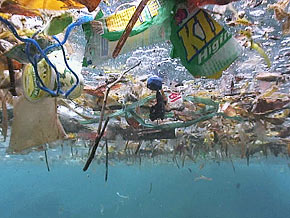
Currently, scientists believe the world's largest garbage dump isn't on land...it's in the Pacific Ocean. The Great Pacific Garbage Patch stretches from the coast of California to Japan, and it's estimated to be twice the size of Texas. "This is the most shocking thing I have seen," Oprah says.
In some places, the floating debris—estimated to be about 90 percent plastic—goes 90 feet deep. Elsewhere, there are six times more pieces of plastic than plankton, the main food source for many sea animals.
Where did this trash come from? Marine biologists estimate that about 80 percent of the litter is from land, either dumped directly into waterways or blown into rivers and streams from states as far away as Iowa.
Published 04/22/2009

Like his grandfather, undersea explorer Jacques Cousteau, Fabien Cousteau has devoted his life to exploring and protecting the world's oceans and sea life.
Many of those affected by the enormous garbage swirl—like sea birds, turtles and beluga whales—can't speak for themselves. "They get caught in these nets, or they swallow some of these bottle caps," Fabien says. "Killer whales, which are kind of our mirror, our canary in the coal mine, so to speak, are ingesting all sorts of things that are affecting their health."
Experts say plastic trash has already killed millions of sea birds and marine mammals. In one case, pieces of plastic and a cigarette lighter were found in the stomach of a dead albatross.
Beluga whales are also suffering. Fabien says some of these marine mammals have been diagnosed with breast cancer, which may be caused by the chemicals they're ingesting.
Published 04/22/2009

If you don't care, you should. Fabien says this pollution will eventually come back to haunt humans and find its way onto our dinner plates.
"The pesticides that you spray on your dandelions run off into the oceans and end up in the food chain, which ends up back in our plates," he says. "It's a closed system. Everything's connected. We're all connected with the planet in very fundamental ways."
Fabien says the Pacific Ocean garbage swirl isn't unique. In fact, every ocean and many major rivers have them. "This one happens to be the largest one," he says.
Published 04/22/2009

Fabien says that when we protect the seas, we protect ourselves. "The ocean belongs to all of us, but there's no single entity or no single nation that's there to protect it," he says. "We need to be able to network and really all care about it and all protect the oceans."
If not for yourself, do it for your children. "You wouldn't let a child open up a cabinet under the sink and start tasting the chemicals down there," Fabien says. "So why would you dump those chemicals down the drain and have them end up on your plate, which you then feed to your child?"
To start making a difference, Fabien suggests signing yourself and your children up for local ecological programs. Want to do more? Find more earth-friendly resources!
Learn more about what really happens to your trash
Published 04/22/2009
