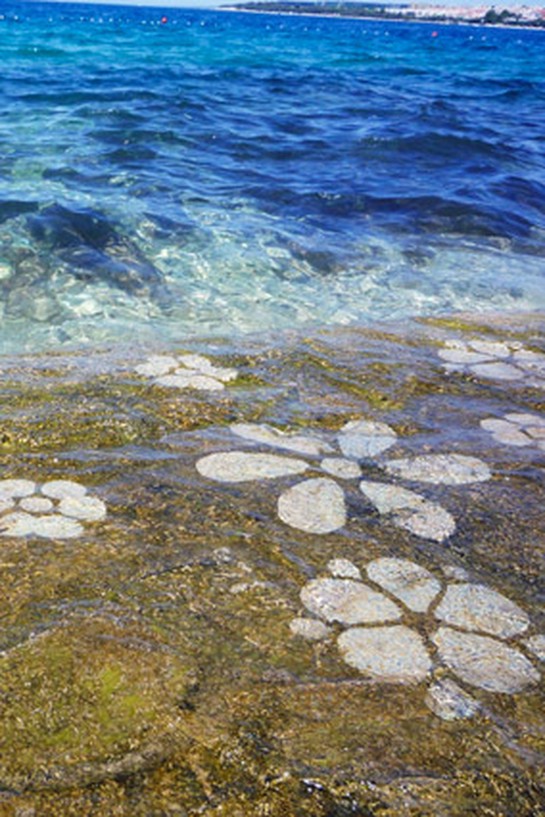
Photo: Moose Benjamin Curtis
Reverse Graffiti
Pollution residue on a stop sign. Algae at the bottom of a public fountain. For most people, such accumulated grit is a dirty, if often overlooked, fact of modern life. But for "reverse graffiti" artists, that dirt is a beckoning canvas.
"Reverse graffiti is about removing layers to create an image," says Paul Curtis (a.k.a. Moose), a pioneer of this art form. Curtis uses water and oversize stencils to clean specific patches of sooty walls in public spaces, "etching" intricate images from grimy backdrops. "What I do is like drawing in the sand," he says. "My work will fade, but the fragility is part of the beauty."
From the
February 2012 issue of
O, The Oprah Magazine