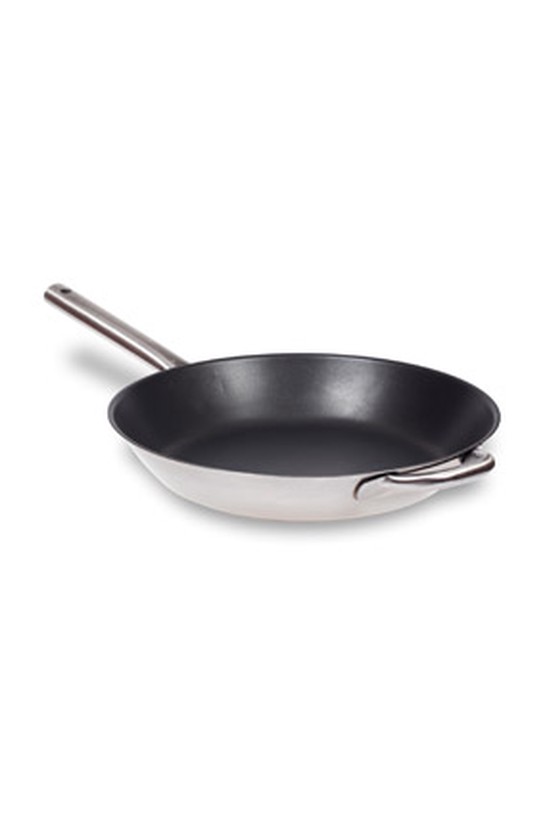
While you want a steak or Brussels sprouts to develop caramelized edges, crisp browning isn't usually the goal when cooking eggs. A nonstick skillet will take you from omelets to quesadillas (it's also helpful if you're trying to cook healthy food, since you'll use less butter or oil). But while every other pan in your arsenal may last long enough to be handed down to the next generation, the nonstick skillet won't have such longevity. Even the most high-end ones tend to
lose their food-releasing powers within five years. Still, you can prolong the life of yours by stirring with only soft utensils made of wood or silicone, washing it with a soft cloth or sponge and mild dish soap, and avoiding the dishwasher at all costs.
Size: 7- to 10-inch
Make sure to...consider your breakfast-making habits before you buy. If you often make two-egg omelets, a 7-inch pan is the perfect size; a 9-inch pan is better for four- or five-egg omelets.
But don't...spray your pan with cooking spray. Eventually it will build up and turn sticky (usually this happens around the edges, where the heat doesn't melt it away). If your pan is truly nonstick, it won't need anything; if you must, use oil.
Try this recipe: Scrambled Eggs, Many Ways