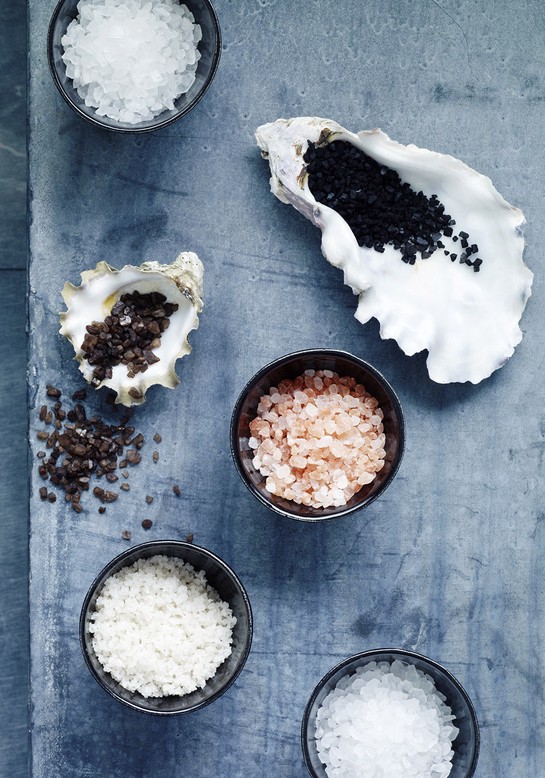
The final sentence of many recipes is, "season with salt and pepper to taste"—which is good advice, but leaves out a crucial aspect of cooking that Tin Vuong, executive chef and co-owner of
Little Sister in Manhattan Beach, CA, learned from years of watching
Julia Child and Jacques Pepin on PBS. They weren't afraid of salt, and would add it to their dishes
throughout the cooking process. Seasoning this way, you use about the same amount of salt as you would have if you'd waited until you were finished cooking; yet, by seasoning and tasting whenever new ingredients are added, each new ingredient will more fully develop its flavor. (Just use a bit less if you're cooking with naturally salty ingredients, such as bacon or capers.) Vuong says the amount is up to you, depending on how salty you like your food; his rule of thumb is that when it's just a bit salty for him, it's usually perfect for whomever he's serving.