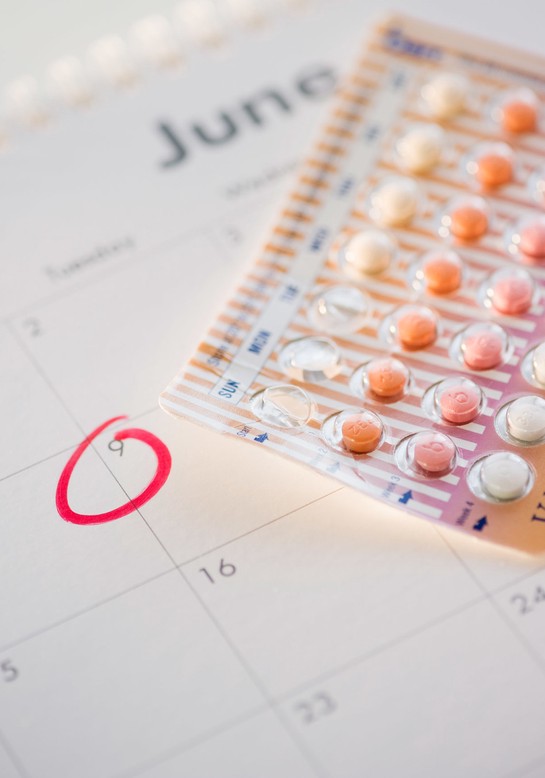
The Situation: You're about to get your period—or you're done with your period for good.
Why it's causing a backup: Progesterone levels are highest during the days leading up to menstruation, known as the luteal phase of your cycle, and the higher the progesterone, the longer it takes for food to travel through your digestive system, Maser says. (It relaxes the smooth muscles in your bowels that normally contract to move food along.) And don't count on not having a period anymore to ease the problem. "Any hormonal shift can lead to changes in bowel motility," Maser adds. In the case of menopause, that means the dryness that's happening elsewhere in your body happens in your digestive system too, leading to—you guessed it—a slowdown. In a study of more than 73,000 postmenopausal women in
The American Journal of Medicine, 34.7 percent reported having constipation.
How to fix it: Help counteract the hormonal havoc by drinking plenty of water and getting your recommended fiber intake. If you find that's not enough to prevent backup, talk to your doctor about using osmotic laxatives to ease the constipation.