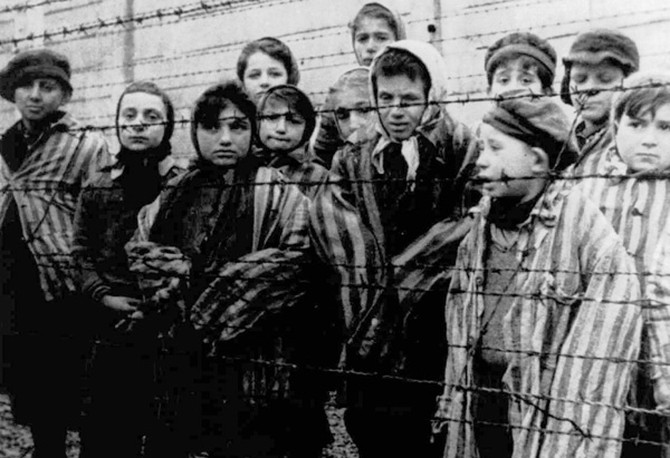
Night, chosen in January 2006 as an Oprah's Book Club selection, has become one of the most important books of our time since it was first published in French in 1958. It is the story of author Elie Wiesel's childhood and the daily terrors he endured inside the German death camps. The autobiographical work recalls the unspeakable horrors Professor Wiesel witnessed during World War II as 6 million Jewish men, women and children were wiped off the face of the earth—including most of his own family.
The evil that Elie Wiesel witnessed is known as the Holocaust, a mass murder meticulously planned and executed by Nazi Germany.
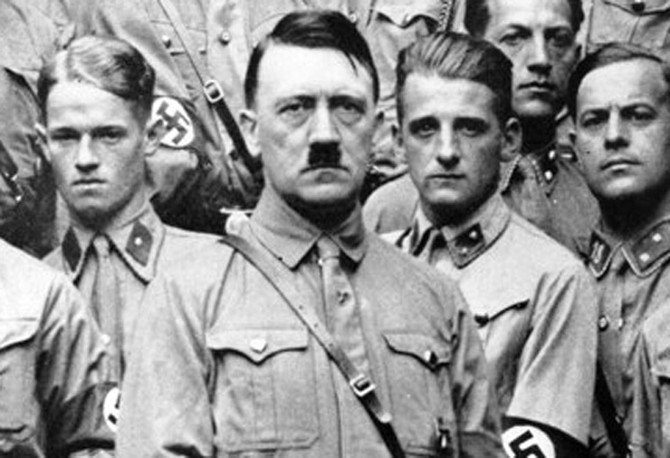
Systematic persecution of European Jews began as soon as the Nazis gained control of Germany's government in 1933. Within two years, the party decreed the Nuremberg Race Laws, which deprived Jews of German citizenship. In 1938, Kristallnacht, a government-organized attack, resulted in the destruction of synagogues, businesses and homes in Germany, Austria and Czechoslovakia. Soon Jews were forced to wear the Star of David sewn to their clothing.
Desperate after the Great Depression, Germans embraced Adolf Hitler's promise of riches to those he dubbed "the master race"—Aryans of pure German blood. On September 1, 1939, Germany invaded Poland and started World War II. The German army immediately began isolating the Jewish population in ghettos.
In 1942, Nazis declared "The Final Solution," a plan to murder all European Jews. The widespread deportation of Jewish families from the ghettos to concentration camps began.
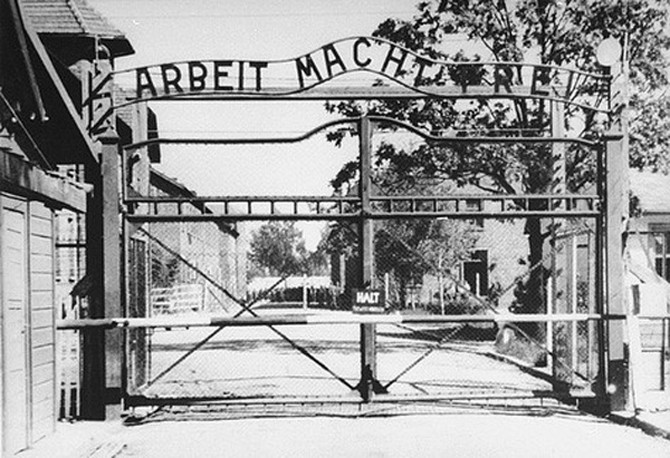
Throughout the 1930s and '40s, Nazis established thousands of concentration camps in Eastern Europe. In a small Polish town stands one of the most notorious and massive camps—Auschwitz. The complex spans 6,720 acres—almost half the size of Manhattan. Auschwitz consisted of three large subcamps: Auschwitz I, the torture center; Auschwitz II, or Birkenau, the point of arrival and main death factory; and Buna, the work camp.
In the beginning, prisoners were executed, starved or worked to death. Soon a faster method of killing evolved, allowing Nazis to murder thousands of people at a time—gas chambers.
Auschwitz was the Holocaust's most productive death camp. Seventy-five percent of those who arrived were immediately sent to the gas chambers, mostly women and children; the remaining were deemed fit to become slave laborers.
Based on declassified war-time intelligence reports, the Allies likely knew about the Nazis' plans to destroy Europe's Jews—as early as the summer of 1942. Nearly 5 million more Jews would be killed before the camps were finally liberated in 1945.
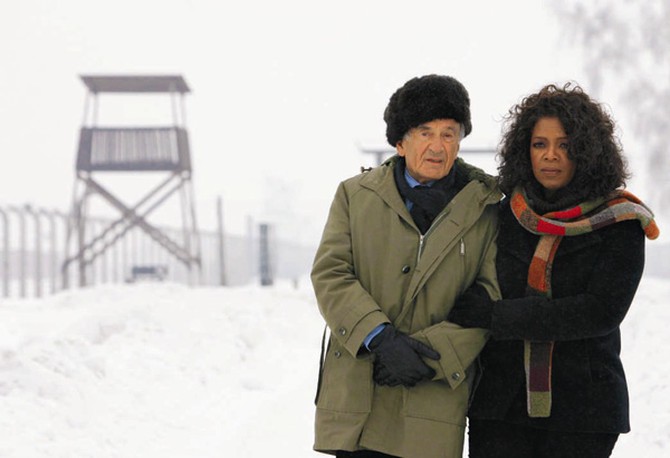
Now a Nobel Peace Prize winner, prolific author, professor and world-renowned humanitarian, Holocaust survivor Elie Wiesel returns to Auschwitz with Oprah to walk the camp's hallowed grounds.
Join them on their journey in Oprah's Book Club.