

Announced May 6, 1999
About the Book
Janet Astrid is the only child of a single mother, Ingrid, a brilliant, obsessed poet who wields her luminous beauty to intimidate and manipulate men. Astrid worships her mother and cherishes their private world full of ritual and mystery-but their idyll is shattered when Astrid's mother falls apart over a lover. Deranged by rejection, Ingrid murders the man, and is sentenced to life in prison.
White Oleander is the unforgettable story of Astrid's journey through a series of foster homes and her efforts to find a place for herself in impossible circumstances. Each home is its own universe, with a new set of laws and lessons to be learned. With determination and humor, Astrid confronts the challenges of loneliness and poverty, and strives to learn who a motherless child in an indifferent world can become. Tough, irrepressible, funny, and warm, Astrid is one of the most indelible characters in recent fiction.
White Oleander is an unforgettable story of mothers and daughters, burgeoning sexuality, the redemptive powers of art, and the unstoppable force of the emergent self. Written with exquisite beauty and grace, this is a compelling debut by an author poised to join the ranks of today's most gifted novelists.
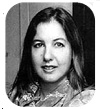 About the Author
Janet Fitch was born in Los Angeles, a third-generation native, and grew up in a family of voracious readers. As an undergraduate at Reed College, Fitch had decided to become an historian, attracted to its powerful narratives, the scope of events, the colossal personalities, and the potency and breadth of its themes. But when she won a student exchange to Keele University in England, where her passion for Russian history led her, she awoke in the middle of the night on her twenty-first birthday with the revelation she wanted to write fiction. "I wanted to Live, not spend my life in a library. Of course, my conception of being a writer was to wear a cape and have Adventures."
Since then, she has had more than a few Adventures. In addition, she has published short stories in literary journals such as Black Warrior Review, Rain City Review, and A Room of One's Own, briefly attended film school in the director's program at the University of Southern California, worked at various times as a typesetter, a proofreader, a graphic artist, a freelance journalist, the managing editor of American Film magazine, and the editor of The Mancos Times Tribune, a weekly newspaper in the mountains of Southwestern Colorado. Currently, she reviews books for Speak magazine in San Francisco, and teaches fiction writing privately in Los Angeles, where she lives with her husband and eight year old daughter.
"White Oleander," the story which grew into her novel, was named as a distinguished story in Best American Short Stories 1994.
Interestingly enough, the story was rejected from The Ontario Review with a note from Joyce Carol Oates, stating that while she enjoyed it, it seemed more like the first chapter of a novel than a short story. It had not occurred to Fitch to extend the story, but she decided to take a chance on this advice and wrote her novel.
Her writing process is simple. "I write all the time, whether I feel like it or not," she says. "I never get inspired unless I'm already writing. I write every day, including weekends. For writers there are no weekends. It's just that your family is around, looking mournful, wondering when you're going to pay attention to them."
Her journalistic experience proved a vaccination against writer's block. "When I had the newspaper, I had to come up with 12 or 15 stories a week regardless of whether there was anything to write about. Someone would call me up and say, "My kid just caught a big fish, come over and take a picture of it." So you'd go take a picture of the fish and then interview the kid. What do you ask a kid who caught a big fish? "What kind of bait were you using? Where'd you catch it? What time of day was it?" I learned you could always write. You just couldn't be too perfectionistic about it."
But the artistry of her work, the lines that take the reader's breath away, were hard-won. "I could always tell a story," she said, "but I needed to learn the poetics of the literary craft." She found her mentor in the writer Kate Braverman, under whom she learned to work until she found the right word, the right sound.
Poetry plays a great part in her writing of prose fiction. "I always read poetry before I write, to sensitize me to the rhythms and music of language. Their startling originality is a challenge. I like Dylan Thomas, Eliot, Sexton. There are parts of White Oleander which use cadences of Pound--whatever you think of Pound, there's a specific music to him. I like Kate Braverman's poetry and the late Donald Rawley's. A novelist can get by on story, but the poet has nothing but the words."
Favorite Books
When I was 7, my brother used to read Poe to me when my parents weren't around. Although such gothic classics as The Masque of the Red Death and The Telltale Heart frightened me endlessly, they also injected me with lifelong taste for the heightened moment, suspense and the music of beautiful language.
Poe in turn led me to my teenaged favorite, my great touchstone ....Doestoyevsky's Crime and Punishment, which appealed both to my fascination with the extremes of the human condition and my concern with the way people form and act upon their values.
I was also drawn, inevitably, to the pantheon of Los Angeles dark classics such as Chandler's Farewell My Lovely, and Nathanael West's The Day of the Locust. Ultimately, my taste for heightened language and experience led me to Faulkner's The Sound and the Fury, Virginia Woolf's The Waves and James Joyce.
But the elegance of such prose was daunting to a would-be young artist. How could I hope to ever write a sentence in a world where Faulkner had already written?
The answer was ... Henry Miller. His wonderful, all-seams-showing Tropic of Cancer gave me permission to write. I realized I didn't have to write perfectly to get something on paper. I could start with feeling, with perspective and a joy in description, and see where they led.
Anais Nin's famous Diaries, which delineated the wonderfully romantic life to which a woman author could aspire, also encouraged my decision to write.
Having made my choice for the literary life, I plunged back into Los Angeles fiction. I was successively captivated by Joan Didion's Play It As It Lays, Kate Braverman's Lithium For Medea (she would later become my teacher), and John Fante's Ask the Dust. These authors whetted my desire to create a literary Los Angeles of my own.
In the last several years, the twin pillars of my reading, the writers to whom I return again and again in my search for a unique language and perspective are Lawrence Durrell and his expansive, sensually rich Alexandria Quartet and Malcolm Lowry's tormented, subterranean Under the Volcano.
Contemporary writers who cast their spell on me are Robert Stone (Dog Soldiers), Robert Olen Butler (They Whisper), Melanie Rae Thon (First, Body) and Ntozake Shange (For Colored Girls Who Have Considered Suicide When the Rainbow is Enuf). I continue to search out wonderful Los Angeles writing such as Donald Rawley's Slow Dance on the Fault Line and Les Plesko's The Last Bongo Sunset.
Always, I look for fiction that provides a double experience -- the experience of the story and the experience of the language above and beyond the story. I don't want just to be entertained. I want to be thrilled, dumbfounded. I want my breath taken away.
My fiction is often laced with references to my own favorite books, and I hope some friends will follow up on a lead or two!
Good reading.
Book Reviews
"This is what you're after when you're browsing the shelves for something good to read. White Oleander is a siren song of a novel, seducing the reader with its story, its language, and, perhaps most of all, with its utterly believable (and remarkably diverse!) characters. The narrator is particularly memorable-there were times she made me want to cheer and weep simultaneously. Finishing this book made me feel gratefully bereft, and I look forward to Janet Fitch's next work."
— Elizabeth Berg, author of Durable Goods and Range of Motion
"Fitch displays remarkabale artistic and psychological maturity throughout, skillfully making use of metaphors (like the beautifully poisonous oleander, Ingrid's signature flower) to illuminate her central theme: the longing for order and connection in a world where even the most intimate bonds can be broken in an instant."
— Kirkus Reviews
 Get more resources on White Oleander, an Oprah's Book Club selection.
View the Complete Oprah's Book Club List.
Janet Astrid is the only child of a single mother, Ingrid, a brilliant, obsessed poet who wields her luminous beauty to intimidate and manipulate men. Astrid worships her mother and cherishes their private world full of ritual and mystery-but their idyll is shattered when Astrid's mother falls apart over a lover. Deranged by rejection, Ingrid murders the man, and is sentenced to life in prison.
White Oleander is the unforgettable story of Astrid's journey through a series of foster homes and her efforts to find a place for herself in impossible circumstances. Each home is its own universe, with a new set of laws and lessons to be learned. With determination and humor, Astrid confronts the challenges of loneliness and poverty, and strives to learn who a motherless child in an indifferent world can become. Tough, irrepressible, funny, and warm, Astrid is one of the most indelible characters in recent fiction.
White Oleander is an unforgettable story of mothers and daughters, burgeoning sexuality, the redemptive powers of art, and the unstoppable force of the emergent self. Written with exquisite beauty and grace, this is a compelling debut by an author poised to join the ranks of today's most gifted novelists.
About the AuthorJanet Fitch was born in Los Angeles, a third-generation native, and grew up in a family of voracious readers. As an undergraduate at Reed College, Fitch had decided to become an historian, attracted to its powerful narratives, the scope of events, the colossal personalities, and the potency and breadth of its themes. But when she won a student exchange to Keele University in England, where her passion for Russian history led her, she awoke in the middle of the night on her twenty-first birthday with the revelation she wanted to write fiction. "I wanted to Live, not spend my life in a library. Of course, my conception of being a writer was to wear a cape and have Adventures."
Since then, she has had more than a few Adventures. In addition, she has published short stories in literary journals such as Black Warrior Review, Rain City Review, and A Room of One's Own, briefly attended film school in the director's program at the University of Southern California, worked at various times as a typesetter, a proofreader, a graphic artist, a freelance journalist, the managing editor of American Film magazine, and the editor of The Mancos Times Tribune, a weekly newspaper in the mountains of Southwestern Colorado. Currently, she reviews books for Speak magazine in San Francisco, and teaches fiction writing privately in Los Angeles, where she lives with her husband and eight year old daughter.
"White Oleander," the story which grew into her novel, was named as a distinguished story in Best American Short Stories 1994.
Interestingly enough, the story was rejected from The Ontario Review with a note from Joyce Carol Oates, stating that while she enjoyed it, it seemed more like the first chapter of a novel than a short story. It had not occurred to Fitch to extend the story, but she decided to take a chance on this advice and wrote her novel.
Her writing process is simple. "I write all the time, whether I feel like it or not," she says. "I never get inspired unless I'm already writing. I write every day, including weekends. For writers there are no weekends. It's just that your family is around, looking mournful, wondering when you're going to pay attention to them."
Her journalistic experience proved a vaccination against writer's block. "When I had the newspaper, I had to come up with 12 or 15 stories a week regardless of whether there was anything to write about. Someone would call me up and say, "My kid just caught a big fish, come over and take a picture of it." So you'd go take a picture of the fish and then interview the kid. What do you ask a kid who caught a big fish? "What kind of bait were you using? Where'd you catch it? What time of day was it?" I learned you could always write. You just couldn't be too perfectionistic about it."
But the artistry of her work, the lines that take the reader's breath away, were hard-won. "I could always tell a story," she said, "but I needed to learn the poetics of the literary craft." She found her mentor in the writer Kate Braverman, under whom she learned to work until she found the right word, the right sound.
Poetry plays a great part in her writing of prose fiction. "I always read poetry before I write, to sensitize me to the rhythms and music of language. Their startling originality is a challenge. I like Dylan Thomas, Eliot, Sexton. There are parts of White Oleander which use cadences of Pound--whatever you think of Pound, there's a specific music to him. I like Kate Braverman's poetry and the late Donald Rawley's. A novelist can get by on story, but the poet has nothing but the words."
Favorite Books
When I was 7, my brother used to read Poe to me when my parents weren't around. Although such gothic classics as The Masque of the Red Death and The Telltale Heart frightened me endlessly, they also injected me with lifelong taste for the heightened moment, suspense and the music of beautiful language.
Poe in turn led me to my teenaged favorite, my great touchstone ....Doestoyevsky's Crime and Punishment, which appealed both to my fascination with the extremes of the human condition and my concern with the way people form and act upon their values.
I was also drawn, inevitably, to the pantheon of Los Angeles dark classics such as Chandler's Farewell My Lovely, and Nathanael West's The Day of the Locust. Ultimately, my taste for heightened language and experience led me to Faulkner's The Sound and the Fury, Virginia Woolf's The Waves and James Joyce.
But the elegance of such prose was daunting to a would-be young artist. How could I hope to ever write a sentence in a world where Faulkner had already written?
The answer was ... Henry Miller. His wonderful, all-seams-showing Tropic of Cancer gave me permission to write. I realized I didn't have to write perfectly to get something on paper. I could start with feeling, with perspective and a joy in description, and see where they led.
Anais Nin's famous Diaries, which delineated the wonderfully romantic life to which a woman author could aspire, also encouraged my decision to write.
Having made my choice for the literary life, I plunged back into Los Angeles fiction. I was successively captivated by Joan Didion's Play It As It Lays, Kate Braverman's Lithium For Medea (she would later become my teacher), and John Fante's Ask the Dust. These authors whetted my desire to create a literary Los Angeles of my own.
In the last several years, the twin pillars of my reading, the writers to whom I return again and again in my search for a unique language and perspective are Lawrence Durrell and his expansive, sensually rich Alexandria Quartet and Malcolm Lowry's tormented, subterranean Under the Volcano.
Contemporary writers who cast their spell on me are Robert Stone (Dog Soldiers), Robert Olen Butler (They Whisper), Melanie Rae Thon (First, Body) and Ntozake Shange (For Colored Girls Who Have Considered Suicide When the Rainbow is Enuf). I continue to search out wonderful Los Angeles writing such as Donald Rawley's Slow Dance on the Fault Line and Les Plesko's The Last Bongo Sunset.
Always, I look for fiction that provides a double experience -- the experience of the story and the experience of the language above and beyond the story. I don't want just to be entertained. I want to be thrilled, dumbfounded. I want my breath taken away.
My fiction is often laced with references to my own favorite books, and I hope some friends will follow up on a lead or two!
Good reading.
Book Reviews
"This is what you're after when you're browsing the shelves for something good to read. White Oleander is a siren song of a novel, seducing the reader with its story, its language, and, perhaps most of all, with its utterly believable (and remarkably diverse!) characters. The narrator is particularly memorable-there were times she made me want to cheer and weep simultaneously. Finishing this book made me feel gratefully bereft, and I look forward to Janet Fitch's next work."
— Elizabeth Berg, author of Durable Goods and Range of Motion
"Fitch displays remarkabale artistic and psychological maturity throughout, skillfully making use of metaphors (like the beautifully poisonous oleander, Ingrid's signature flower) to illuminate her central theme: the longing for order and connection in a world where even the most intimate bonds can be broken in an instant."
— Kirkus Reviews
Get more resources on White Oleander, an Oprah's Book Club selection.View the Complete Oprah's Book Club List.
Published 05/06/1999
