
5 Questions for Legendary Mystery Author Sue Grafton
A conversation with the writer helps solve the most intriguing mystery of all: what powers her undiminished passion for writing.
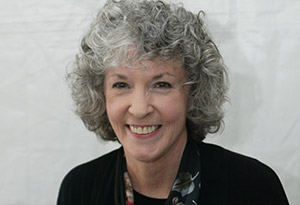
Photo: Getty Images
At 72, having reached V Is for Vengeance in her groundbreaking Kinsey Millhone "alphabet" detective series, multimillion best-selling author Sue Grafton is temporarily shifting gears. This month she marks the series' 30th anniversary with the publication of a collection of short fiction and essays, Kinsey and Me: Stories (Marian Wood/Putnam), in which she opens up about the difficult childhood that started her on the road to becoming a writer, discusses the fine art of plotting a mystery, and gives us some never-before-seen Kinsey Millhone short pieces. O's books editor, Leigh Haber, asked the master storyteller why she decided to offer this peek behind the curtain.
Q: Your parents were both alcoholics whose drinking often took precedence over the day-to-day care of you and your sister. What enabled you to stay strong?
SG: Writing. Pure and simple. Writing was my anchor and gave me a way to convert all of that unhappiness into something that would serve me. I've made my peace with what went down. My parents were smart, gentle people; they just weren't very good at their relationship.
Q: In this book, you write of yourself as a very young girl, sitting at home alone at night, reading mysteries with a butcher knife by your side just in case. You were reading scary stories all by yourself while being afraid of intruders?
SG: I remember the knife had a bone handle and the blade was really slender from use. It would have come in handy if I'd been in trouble! The contradiction didn't bother me at all. I would sit and read a mystery novel, ready to be done in by whoever was coming down the steps, or up from the basement. I'm well acquainted with jeopardy and fear of a very visceral sort, and some of that I put into my work.
Q: When you created Kinsey, you turned the detective genre on its head by making her a woman.
SG: When I published A Is for Alibi in 1982, it didn't dawn on me that there were so few female private eyes. But since my only area of experience was being a woman, I made Kinsey one, too. I wasn't making a political point. I was already so far out of my expertise in terms of the forensic world, I just created an alter ego and got to funnel all my bad language and irreverent thoughts into her. At first some people took offense and thought: "She is really stepping out of her place in the world." But pretty soon, the world caught up. Now I look like a hero, when in fact I was just being sassy.
Q: You speak of Kinsey as if she's a real person. It's got to be difficult to think about parting with her, once you reach the letter Z. Would you ever consider actually killing her off?
SG: Oh, no. When you suggest that Kinsey is not real you give me the willies. I think: "She's not?" Because she runs my life. Everything I do is about Kinsey Millhone, so if you think I'm letting her go or she's letting me go when we get to Z Is for Zero, you are mistaken. I can't imagine letting go of her or of writing.
Q: You have never spoken publicly of what you describe in the new book as a painful childhood. Why now?
SG: I wrote the stories about my parents when I was in my 30s and my grief over my mother's death was fresh. It took nerve to finally share them, and I'm still uneasy about it because I guess I'm more private than I thought. However, I'm 72 years old. If I can't tell the truth now, when am I going to be allowed to?
More on Books:
Q: Your parents were both alcoholics whose drinking often took precedence over the day-to-day care of you and your sister. What enabled you to stay strong?
SG: Writing. Pure and simple. Writing was my anchor and gave me a way to convert all of that unhappiness into something that would serve me. I've made my peace with what went down. My parents were smart, gentle people; they just weren't very good at their relationship.
Q: In this book, you write of yourself as a very young girl, sitting at home alone at night, reading mysteries with a butcher knife by your side just in case. You were reading scary stories all by yourself while being afraid of intruders?
SG: I remember the knife had a bone handle and the blade was really slender from use. It would have come in handy if I'd been in trouble! The contradiction didn't bother me at all. I would sit and read a mystery novel, ready to be done in by whoever was coming down the steps, or up from the basement. I'm well acquainted with jeopardy and fear of a very visceral sort, and some of that I put into my work.
Q: When you created Kinsey, you turned the detective genre on its head by making her a woman.
SG: When I published A Is for Alibi in 1982, it didn't dawn on me that there were so few female private eyes. But since my only area of experience was being a woman, I made Kinsey one, too. I wasn't making a political point. I was already so far out of my expertise in terms of the forensic world, I just created an alter ego and got to funnel all my bad language and irreverent thoughts into her. At first some people took offense and thought: "She is really stepping out of her place in the world." But pretty soon, the world caught up. Now I look like a hero, when in fact I was just being sassy.
Q: You speak of Kinsey as if she's a real person. It's got to be difficult to think about parting with her, once you reach the letter Z. Would you ever consider actually killing her off?
SG: Oh, no. When you suggest that Kinsey is not real you give me the willies. I think: "She's not?" Because she runs my life. Everything I do is about Kinsey Millhone, so if you think I'm letting her go or she's letting me go when we get to Z Is for Zero, you are mistaken. I can't imagine letting go of her or of writing.
Q: You have never spoken publicly of what you describe in the new book as a painful childhood. Why now?
SG: I wrote the stories about my parents when I was in my 30s and my grief over my mother's death was fresh. It took nerve to finally share them, and I'm still uneasy about it because I guess I'm more private than I thought. However, I'm 72 years old. If I can't tell the truth now, when am I going to be allowed to?
More on Books:

NEXT STORY

