

Announced on October, 18, 1996
About the Book
It is a world we enter in the present, through Macon Dead, Jr. (known as Milkman), son of the richest black family in a Midwestern town. We enter it on the day of his birth (the first black baby allowed to be born at Mercy — popularly called "No Mercy" — Hospital), the day on which the lonely insurance man Robert Smith, poised in blue silk wings, attempts to fly from the steeple of the hospital, a black Icarus looking homeward...
We see Milkman growing up in his father's money-haunted, death-haunted house with his silent sisters and strangely passive mother, and we watch his beginning to move outward — through his profound love and combat with his friend (his Biblical brother) Guitar... through Guitar's mad and loving commitment to the band of seven, the secret avengers called the Seven Days... through Milkman's exotic and then imprisoning affair with his love-blind cousin, Hagar... and through his unconscious apprenticeship to the one person in his family who is open, unfettered, whole: the exiled one, his unkempt, mystical, bootlegging Aunt Pilate. With a brass box for an earring and no navel — "a stomach blind as a knee...something God never made" — Pilate looks like a tall black tree. Pilate also saved Milkman's life before he was born.
And we follow him as he strikes out alone, drawn away from home South, to the place his father came from, by the promise of buried gold. Moving first toward adventure and then — as the unspoken truth about his family and his own buried heritage announces itself — toward an adventurous and crucial embrace of life.
This is a novel in which mystery unfolds on mystery, revelation on revelation — in which our vision of what we have seen turns, changes, and takes shape again, transformed. It is a novel expressing with passion, tenderness, and a magnificence of language the mysterious primal essence of family bond and conflict, the feelings and experience of all people wanting, and striving to be alive.
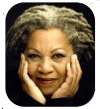 About the Author
The volume of critical and popular acclaim that has arisen around the work of Toni Morrison is virtually unparalleled in modern letters. Her six major novels—The Bluest Eye, Song of Solomon, Sula, Tar Baby, Beloved, and Jazz—have collected nearly every major literary prize. Ms. Morrison received the National Book Critics Circle Award in 1977 for Song of Solomon. In 1987, Beloved was awarded the Pulitzer Prize. Her body of work was awarded the Nobel Prize for Literature in 1993. Other major awards include: the 1996 National Book Foundation Medal for Distinguished Contribution to American Letters, the Pearl Buck Award (1994), the title of Commander of the Order of Arts and Letters (Paris, 1994), and 1978 Distinguished Writer Award from the American Academy of Arts and Letters.
Ms. Morrison was appointed Robert F. Goheen Professor of the Council of the Humanities at Princeton University in the spring of 1989. Before coming to Princeton, she held teaching posts at Yale University, Bard College, and Rutgers University. In 1990 she delivered the Clark lectures at Trinity College, Cambridge, and the Massey Lectures at Harvard University. Ms. Morrison was also a senior editor at Random House for twenty years. She has degrees from Howard and Cornell Universities.
Ms. Morrison's latest novel, Paradise, was published by Knopf on January 15, 1998. In it, Ms. Morrison tells the story of Ruby, OK, a fictional town populated exclusively by African-Americans. It is her most ambitious work to date, executing changes of time and place with consummate skill. A host of colleges and universities have given honorary degrees to Ms. Morrison. Among them are Harvard, the University of Pennsylvania, Sarah Lawrence College, Dartmouth, Yale, Georgetown, Columbia University and Brown University. Ms. Morrison was commissioned by Carnegie Hall in 1992 to write lyrics "Honey and Me", an original piece of music by Andre Previn. The lyrics were sung in performance by Kathleen Battle. In 1997, she wrote the lyrics for "Sweet Talk", which was written by Richard Danielpour and performed in concert by Jessye Norman. Ms. Morrison lives lives in Princeton, New Jersey and upstate New York.
Toni Morrison has earned a reputation as a gifted storyteller whose troubled characters seek to find themselves and their cultural riches in a society that warps or impedes such essential growth. According to Charles Larson in the Chicago Tribune Book World, each of Morrison's novels "is as original as anything that has appeared in our literature in the last 20 years. The contemporaneity that unites them—the troubling persistence of racism in America—is infused with an urgency that only a black writer can have about our society."
Book Reviews
"To a reader who can rise to the appropriate level of exuberant curiosity and delight in purely visual reality, Morrison's repayment is large and is paid out steadily as the action advances along a wide front .... [Morrison has] a power of vision and statement as effortless and commanding as any in twentieth-century American fiction....As much as any novel that stands before it..."Song of Solomon" lays out a whole world made from the wrack and cinders of an unimaginable waste and loss - from the all-top imaginable centuries of the cruel enslavement of untold millions."
— From the introduction by Reynolds Price
"A stunningly beautiful book....I would call the book poetry, but that would seem to be denying its considerable power as a story. Whatever name you give it, it's full of magnificent people, each of them complex and mutlilayered, even the narrowest of them narrow in extravagant ways. They are still haunting my house. I suspect they will be with me forever."
— Anne Tyler,Washington Post, Dec. 1977
"A cause for celebration...a remarkable novel that abounds with life...beautiful, funny, enormously moving, enchanting, laden with cunningly wrought mysteries. It is the best novel of the black experience in America since "Invisible Man" ...."
— Book of the Month Club News
"Toni Morrison has created a fanciful world here -a universe where ghosts exist, where a dead man's bones are kept in the living room, where a young woman dies of heartbreak, and a grown man will himself to fly....She has an impeccable sense of emotional detail. She's the most sensible lyrical writer around today."
— Philadelphia Inquirer
"Morrison dazzles... She creates a black community strangely unto itself yet never out of touch with the white world...With an ear as sharp as glass she has listened to the music of black talk and uses it as a palette knife to create black lives and provide some of the best fictional dialogue around today ... a beautiful balance between language and thought."
— The Nation
 Get more resources on Song of Solomon, an Oprah's Book Club selection.
View the Complete Oprah's Book Club List.
It is a world we enter in the present, through Macon Dead, Jr. (known as Milkman), son of the richest black family in a Midwestern town. We enter it on the day of his birth (the first black baby allowed to be born at Mercy — popularly called "No Mercy" — Hospital), the day on which the lonely insurance man Robert Smith, poised in blue silk wings, attempts to fly from the steeple of the hospital, a black Icarus looking homeward...
We see Milkman growing up in his father's money-haunted, death-haunted house with his silent sisters and strangely passive mother, and we watch his beginning to move outward — through his profound love and combat with his friend (his Biblical brother) Guitar... through Guitar's mad and loving commitment to the band of seven, the secret avengers called the Seven Days... through Milkman's exotic and then imprisoning affair with his love-blind cousin, Hagar... and through his unconscious apprenticeship to the one person in his family who is open, unfettered, whole: the exiled one, his unkempt, mystical, bootlegging Aunt Pilate. With a brass box for an earring and no navel — "a stomach blind as a knee...something God never made" — Pilate looks like a tall black tree. Pilate also saved Milkman's life before he was born.
And we follow him as he strikes out alone, drawn away from home South, to the place his father came from, by the promise of buried gold. Moving first toward adventure and then — as the unspoken truth about his family and his own buried heritage announces itself — toward an adventurous and crucial embrace of life.
This is a novel in which mystery unfolds on mystery, revelation on revelation — in which our vision of what we have seen turns, changes, and takes shape again, transformed. It is a novel expressing with passion, tenderness, and a magnificence of language the mysterious primal essence of family bond and conflict, the feelings and experience of all people wanting, and striving to be alive.
About the AuthorThe volume of critical and popular acclaim that has arisen around the work of Toni Morrison is virtually unparalleled in modern letters. Her six major novels—The Bluest Eye, Song of Solomon, Sula, Tar Baby, Beloved, and Jazz—have collected nearly every major literary prize. Ms. Morrison received the National Book Critics Circle Award in 1977 for Song of Solomon. In 1987, Beloved was awarded the Pulitzer Prize. Her body of work was awarded the Nobel Prize for Literature in 1993. Other major awards include: the 1996 National Book Foundation Medal for Distinguished Contribution to American Letters, the Pearl Buck Award (1994), the title of Commander of the Order of Arts and Letters (Paris, 1994), and 1978 Distinguished Writer Award from the American Academy of Arts and Letters.
Ms. Morrison was appointed Robert F. Goheen Professor of the Council of the Humanities at Princeton University in the spring of 1989. Before coming to Princeton, she held teaching posts at Yale University, Bard College, and Rutgers University. In 1990 she delivered the Clark lectures at Trinity College, Cambridge, and the Massey Lectures at Harvard University. Ms. Morrison was also a senior editor at Random House for twenty years. She has degrees from Howard and Cornell Universities.
Ms. Morrison's latest novel, Paradise, was published by Knopf on January 15, 1998. In it, Ms. Morrison tells the story of Ruby, OK, a fictional town populated exclusively by African-Americans. It is her most ambitious work to date, executing changes of time and place with consummate skill. A host of colleges and universities have given honorary degrees to Ms. Morrison. Among them are Harvard, the University of Pennsylvania, Sarah Lawrence College, Dartmouth, Yale, Georgetown, Columbia University and Brown University. Ms. Morrison was commissioned by Carnegie Hall in 1992 to write lyrics "Honey and Me", an original piece of music by Andre Previn. The lyrics were sung in performance by Kathleen Battle. In 1997, she wrote the lyrics for "Sweet Talk", which was written by Richard Danielpour and performed in concert by Jessye Norman. Ms. Morrison lives lives in Princeton, New Jersey and upstate New York.
Toni Morrison has earned a reputation as a gifted storyteller whose troubled characters seek to find themselves and their cultural riches in a society that warps or impedes such essential growth. According to Charles Larson in the Chicago Tribune Book World, each of Morrison's novels "is as original as anything that has appeared in our literature in the last 20 years. The contemporaneity that unites them—the troubling persistence of racism in America—is infused with an urgency that only a black writer can have about our society."
Book Reviews
"To a reader who can rise to the appropriate level of exuberant curiosity and delight in purely visual reality, Morrison's repayment is large and is paid out steadily as the action advances along a wide front .... [Morrison has] a power of vision and statement as effortless and commanding as any in twentieth-century American fiction....As much as any novel that stands before it..."Song of Solomon" lays out a whole world made from the wrack and cinders of an unimaginable waste and loss - from the all-top imaginable centuries of the cruel enslavement of untold millions."
— From the introduction by Reynolds Price
"A stunningly beautiful book....I would call the book poetry, but that would seem to be denying its considerable power as a story. Whatever name you give it, it's full of magnificent people, each of them complex and mutlilayered, even the narrowest of them narrow in extravagant ways. They are still haunting my house. I suspect they will be with me forever."
— Anne Tyler,Washington Post, Dec. 1977
"A cause for celebration...a remarkable novel that abounds with life...beautiful, funny, enormously moving, enchanting, laden with cunningly wrought mysteries. It is the best novel of the black experience in America since "Invisible Man" ...."
— Book of the Month Club News
"Toni Morrison has created a fanciful world here -a universe where ghosts exist, where a dead man's bones are kept in the living room, where a young woman dies of heartbreak, and a grown man will himself to fly....She has an impeccable sense of emotional detail. She's the most sensible lyrical writer around today."
— Philadelphia Inquirer
"Morrison dazzles... She creates a black community strangely unto itself yet never out of touch with the white world...With an ear as sharp as glass she has listened to the music of black talk and uses it as a palette knife to create black lives and provide some of the best fictional dialogue around today ... a beautiful balance between language and thought."
— The Nation
Get more resources on Song of Solomon, an Oprah's Book Club selection.View the Complete Oprah's Book Club List.
Published 10/18/1996
