
In Her Shoes
To keep her spirits up as she tends to her mother, Edwidge Danticat looks down.
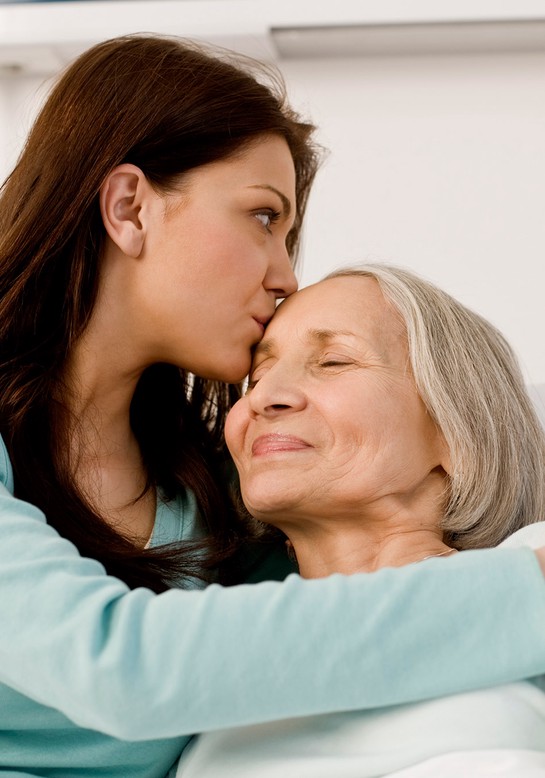
Becoming a parent's caregiver is a lot like becoming a parent. No one hands you a manual, just a life to love and protect in new, uncharted ways. Except with parents, you have to negotiate that very sensitive space between being helpful and making them feel helpless—between your humility and their humiliation.
One of the things I do to "look after" my mother and myself during her doctors' appointments is take cell phone pictures of her feet—in sandals, in socks, barefoot. I take pictures of her feet with my feet lying in bed next to her, with doctors' feet, with lab technicians' feet. I do this sometimes to keep my head down so she can't see my tears as the nurses draw her blood for the thousandth time or as she is being slid through another diagnostic machine that looks like a coffin. But I also take these pictures to remind myself what it's like not just to be my mother's caregiver, but to be my mother.
There's a Haitian Creole expression, pye poudre, which is used to talk about people who have traveled long and far. My mother's feet have walked the circumference of my entire world, from Haiti, where we were born, to the United States, where she came when I was 4, leaving my brother and me in the care of relatives until she could support us and until U.S. immigration officials finally cleared our reunion, when I was 12. I used to count my age in Mommy years, subtracting the eight she and I spent apart. In early adulthood, I was the one who was pye poudre, venturing away from my mother: going to graduate school, falling in love, having babies of my own. These days, though, my mother and I find ourselves constantly side by side, our four feet lined up, as if waiting to head out on yet another trip, this time together.
Caring for my mother has meant supporting her as she faces some very difficult moments, but it has also meant embarking on a communal journey through bad and good times, which neither of us will ever take for granted.
From the November 2014 issue of O, The Oprah Magazine
Get the Inspiration Newsletter
Soul-stirring features and interviews that nourish your spirit.
By entering your email address, you agree to our Terms of Use and acknowledge the Privacy Policy. OWN and its affiliates may use your email address to provide updates/news, ads, and offers.
To withdraw your consent or learn more about your rights, see the Privacy Policy.
