

Announced November 10, 1999
It is 1972 and Ellen Grier finds herself back in the Midwestern hometown she thought she had escaped for good. Worse yet, she and her family have had to move in with her in-laws: narrow-minded, eccentric people who are as tough as the farm lives they have endured. Devout Catholics, they inhabit a world "as rigid, as precise as a church," and Ellen struggles to live by their motto: "A place for everything; everything in its place."
But there is no place for Ellen—fresh, funny, bright with passion—in a house filled with the dust of routine and the ritual of prayer, the lingering bitterness of her in-laws' loveless marriage. She tries to be the model woman everyone expects her to be - teaching at the Catholic school, coaxing her traveling-salesman husband through his increasingly irrational moods, caring for his aging parents—but Ellen's hopes for her family's future collide with life in this bizarre household, and she worries over her wryly observant adolescent daughter and her timid young son.
Encouraged by her friend Barb, a woman ostracized for being "modern" and "wild," Ellen begins to consider her own desires and dreams as well. Surrounded by the family's obsession with an exacting, angry God and the disquieting ghosts of the past, Ellen searches for a way to satisfy the demands of this rural community and its traditions until, at last, she discovers the family's darkest secret, one that frees her and changes her life forever.
A. Manette Ansay's personal essay
Autobiography of A. Manette Ansay
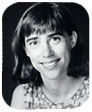 I was born in Michigan, outside Detroit, but I moved to Port Washington, Wisconsin—a small town north of Milwaukee—when I was five. Both my parents come from farming families, and I have over sixty cousins and over a hundred second cousins who still live in Wisconsin. I was involved in my local 4-H Club by default (I was expelled from the Girl Scouts for biting) and took Suzuki piano lessons, traveling each summer to music camp at the U of Wisconsin/Steven's Point. Later, I went on to take lessons at the Wisconsin Conservatory of Music and the music department at the University of Wisconsin, Milwaukee.
After graduating from Port Washington High School in 1982, I attended the Peabody Conservatory of Music (at Johns Hopkins in Baltimore) as a piano performance major. (I drew on these experiences in my second novel, Sister.) I left Baltimore in spring of 1984 and went to work for the American Museum of Natural History on an uninhabited island off the coast of Long Island Sound. For two summers I lived on Great Gull Island, participating in a study of common and roseate terns; winters I went to Florida, where I worked at various wildlife organizations in the Fort Meyers area. (I was a big hitch-hiker in those days.) But in spring of '85, I returned to school, this time at the University of Maine—the result of another hitch-hiking expedition—where I worked on their bald eagle project and, also, for the Northeast Archives of Folklore and Oral History. My declared major of anthropology, a field which would become very important to my future writing career. At the time, I did not write. I had never liked reading, never kept a diary, and had hated the English classes I'd taken in high school.
I'd been experiencing increased pain and weakness in my arms and legs since I was 17; the reason I left music school was that I was unable to endure the grueling seven- to nine-hour daily practice schedule. I was also having difficulty walking long distances. By the fall of '85, I was unable to walk to my classes; I was (mis)diagnosed with MS. I took a medical leave and wound up bedridden (I lived with my parents) until spring of '87 when I was able to get around again using a wheelchair and braces. My health improved through the late '80s and seems to have stabilized since the early '90s. The current diagnosis is that I have a genetic muscle disease and that we must wait and see what happens. At any rate, by the time I was 23, it was clear to me that I needed to find something I could do sitting down.
On January 1, 1988, I made a New Year's resolution that I would write for two hours three times a week. Looking back, this strikes me as particularly odd because, as I've said, I had never been much of a reader, and I certainly don't come from a background of writers and writing. (My dad has a ninth-grade education.) At the time, I had just returned to the University of Maine to complete my anthropology degree; I moved in with my new boyfriend (who would become my husband) from Orono to Portland, Maine, because I'd heard that there were creative writing classes taught at the University of Southern Maine. I worked as a receptionist in a hair salon. My boyfriend helped me keep to my writing schedule. At the time, I was writing poetry, but he kept encouraging me to write fiction, so I finally did. In the summer of 1988 I won a "scholarship" to the Stonecoast Writer's Conference in Portland, Maine. (Later, I found out that my tuition had been secretly paid by an older woman in one of my writing classes.) At the conference, I learned about MFA programs; I applied to Cornell and was accepted.
I attended Cornell from fall of '89 until spring of '91; I married my husband, Jake Smith, on the campus in 1990. I held a lectureship there from '91-'92; from '92-'93 I was Writer in Residence at Phillips Exeter Academy in Exeter, New Hampshire; from '93-'97 I was an assistant professor at Vanderbilt University in Nashville, Tennessee. In spring of '97 I quit in order to write full time. I have since taught as a visiting writer at Warren Wilson College (in Asheville, North Carolina; fall '97) and the University of the South (in Sewanee, Tennessee; fall '98). I moved to New York City in March.
As for my publishing bio:
My first novel, Vinegar Hill, was named one of the Best Books of 1994 by the Chicago Tribune, and it won a Friends of America Writers Prize (second place) in 1995 for a book set in the Midwest. My second book, a collection of stories called Read This and Tell Me What It Says, won the Associated Writing Program's 1994 Short Fiction Series Prize, the 1995 Paterson Prize, and the 1996 Great Lakes Book Award. The title story won the Nelson Algren Prize in 1992, and another story, Sybil, won a 1994 Pushcart Prize. My second novel, Sister, was published by William Morrow & Co. in 1996, and it won the Wisconsin Librarians Association Banta Award and was named a Notable Book by the New York Times. My third novel, River Angel, again with William Morrow, was also a Times Notable Book. All my books have been published in paperback by Avon (River Angel is forthcoming in paper in 1999); foreign rights have been sold in the U.K., Germany and Japan. I've been awarded fellowships to Yaddo (1994) and the MacDowell Colony (1991/1995) as well as a grant from the National Endowment for the Arts.
 Get more resources on Vinegar Hill, an Oprah's Book Club selection.
View the Complete Oprah's Book Club List.
But there is no place for Ellen—fresh, funny, bright with passion—in a house filled with the dust of routine and the ritual of prayer, the lingering bitterness of her in-laws' loveless marriage. She tries to be the model woman everyone expects her to be - teaching at the Catholic school, coaxing her traveling-salesman husband through his increasingly irrational moods, caring for his aging parents—but Ellen's hopes for her family's future collide with life in this bizarre household, and she worries over her wryly observant adolescent daughter and her timid young son.
Encouraged by her friend Barb, a woman ostracized for being "modern" and "wild," Ellen begins to consider her own desires and dreams as well. Surrounded by the family's obsession with an exacting, angry God and the disquieting ghosts of the past, Ellen searches for a way to satisfy the demands of this rural community and its traditions until, at last, she discovers the family's darkest secret, one that frees her and changes her life forever.
A. Manette Ansay's personal essay
Autobiography of A. Manette Ansay
I was born in Michigan, outside Detroit, but I moved to Port Washington, Wisconsin—a small town north of Milwaukee—when I was five. Both my parents come from farming families, and I have over sixty cousins and over a hundred second cousins who still live in Wisconsin. I was involved in my local 4-H Club by default (I was expelled from the Girl Scouts for biting) and took Suzuki piano lessons, traveling each summer to music camp at the U of Wisconsin/Steven's Point. Later, I went on to take lessons at the Wisconsin Conservatory of Music and the music department at the University of Wisconsin, Milwaukee.After graduating from Port Washington High School in 1982, I attended the Peabody Conservatory of Music (at Johns Hopkins in Baltimore) as a piano performance major. (I drew on these experiences in my second novel, Sister.) I left Baltimore in spring of 1984 and went to work for the American Museum of Natural History on an uninhabited island off the coast of Long Island Sound. For two summers I lived on Great Gull Island, participating in a study of common and roseate terns; winters I went to Florida, where I worked at various wildlife organizations in the Fort Meyers area. (I was a big hitch-hiker in those days.) But in spring of '85, I returned to school, this time at the University of Maine—the result of another hitch-hiking expedition—where I worked on their bald eagle project and, also, for the Northeast Archives of Folklore and Oral History. My declared major of anthropology, a field which would become very important to my future writing career. At the time, I did not write. I had never liked reading, never kept a diary, and had hated the English classes I'd taken in high school.
I'd been experiencing increased pain and weakness in my arms and legs since I was 17; the reason I left music school was that I was unable to endure the grueling seven- to nine-hour daily practice schedule. I was also having difficulty walking long distances. By the fall of '85, I was unable to walk to my classes; I was (mis)diagnosed with MS. I took a medical leave and wound up bedridden (I lived with my parents) until spring of '87 when I was able to get around again using a wheelchair and braces. My health improved through the late '80s and seems to have stabilized since the early '90s. The current diagnosis is that I have a genetic muscle disease and that we must wait and see what happens. At any rate, by the time I was 23, it was clear to me that I needed to find something I could do sitting down.
On January 1, 1988, I made a New Year's resolution that I would write for two hours three times a week. Looking back, this strikes me as particularly odd because, as I've said, I had never been much of a reader, and I certainly don't come from a background of writers and writing. (My dad has a ninth-grade education.) At the time, I had just returned to the University of Maine to complete my anthropology degree; I moved in with my new boyfriend (who would become my husband) from Orono to Portland, Maine, because I'd heard that there were creative writing classes taught at the University of Southern Maine. I worked as a receptionist in a hair salon. My boyfriend helped me keep to my writing schedule. At the time, I was writing poetry, but he kept encouraging me to write fiction, so I finally did. In the summer of 1988 I won a "scholarship" to the Stonecoast Writer's Conference in Portland, Maine. (Later, I found out that my tuition had been secretly paid by an older woman in one of my writing classes.) At the conference, I learned about MFA programs; I applied to Cornell and was accepted.
I attended Cornell from fall of '89 until spring of '91; I married my husband, Jake Smith, on the campus in 1990. I held a lectureship there from '91-'92; from '92-'93 I was Writer in Residence at Phillips Exeter Academy in Exeter, New Hampshire; from '93-'97 I was an assistant professor at Vanderbilt University in Nashville, Tennessee. In spring of '97 I quit in order to write full time. I have since taught as a visiting writer at Warren Wilson College (in Asheville, North Carolina; fall '97) and the University of the South (in Sewanee, Tennessee; fall '98). I moved to New York City in March.
As for my publishing bio:
My first novel, Vinegar Hill, was named one of the Best Books of 1994 by the Chicago Tribune, and it won a Friends of America Writers Prize (second place) in 1995 for a book set in the Midwest. My second book, a collection of stories called Read This and Tell Me What It Says, won the Associated Writing Program's 1994 Short Fiction Series Prize, the 1995 Paterson Prize, and the 1996 Great Lakes Book Award. The title story won the Nelson Algren Prize in 1992, and another story, Sybil, won a 1994 Pushcart Prize. My second novel, Sister, was published by William Morrow & Co. in 1996, and it won the Wisconsin Librarians Association Banta Award and was named a Notable Book by the New York Times. My third novel, River Angel, again with William Morrow, was also a Times Notable Book. All my books have been published in paperback by Avon (River Angel is forthcoming in paper in 1999); foreign rights have been sold in the U.K., Germany and Japan. I've been awarded fellowships to Yaddo (1994) and the MacDowell Colony (1991/1995) as well as a grant from the National Endowment for the Arts.
Get more resources on Vinegar Hill, an Oprah's Book Club selection.View the Complete Oprah's Book Club List.
Published 11/10/1999
