

Announced May 26, 2000
About the Book
A decade ago she put a face on every mother's worst nightmare with her phenomenal best-seller The Good Mother. Now, Sue Miller delivers a spellbinding novel of love and betrayal that explores what it means to be a good wife.
In the summer of 1968, Jo Becker ran out on the marriage and the life her parents wanted for her, and escaped--for one beautiful, idyllic year--into a life that was bohemian and romantic, living under an assumed name in a rambling group house in Cambridge. It was a time of limitless possibility, but it ended in a single instant when Jo returned home one night to find her best friend lying dead in a pool of blood on the living room floor.
Now Jo has everything she's ever wanted: a veterinary practice she loves, a devoted husband, three grown daughters, a beautiful Massachusetts farmhouse. And if occasionally she feels a stranger to herself and wonders what happened to the freedom she once felt, or how she came to be the wife, mother, and doctor her neighbors know and trust--if at times she feels as if her whole life is vanishing behind her as she's living it--she need only look at her daughters or her husband, Daniel, to recall the satisfactions of family and community and marriage.
But when an old housemate settles in her small town, the fabric of Jo's life begins to unravel: seduced again by the enticing possibility of another self and another life, she begins a dangerous flirtation that returns her to the darkest moment of her past and imperils all she loves.
While I Was Gone is an exquisitely suspenseful novel about how quickly and casually a marriage can be destroyed, how a good wife can find herself placing all she holds dear at risk. In expert strokes, Sue Miller captures the precariousness of even the strongest ties, the ease with which we abandon each other, and our need to be forgiven. An extraordinary book, her best, from a beloved American writer.
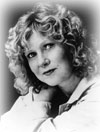 About the Author
I was born on the South Side of Chicago in 1943, the second child of four. My family was ecclesiastical to its roots - my father was an ordained minister (though he never had a church), and both grandfathers and various great grandfathers and so on back through the ages were preachers. More important, my parents struggled to make their lives meaningful in terms of witness to conscience, to pacifism, to racial equality; and though I don't see the direct embrace of religion among my siblings, and the cousins in my generation, I'm aware, in myself anyway, of a tendency towards self-examination and examination of others-intention, meanings, scruples, ethics-that seems to connect directly to that tradition, and has served me well as a writer.
For about twenty years, my father taught church history at the University of Chicago. I went to a public grammar school in Hyde Park. I was a reader, a painter, an inventor of solitary projects, the quiet child in a fairly boisterous family. I attended a tiny private girls' school, now defunct, for high school. I was writing poetry all the time I was growing up, mostly derivative, though decreasingly sappy as time went on.
At sixteen, after my junior year of high school, I began Radcliffe College. I was, simply, too young to have done this. Overwhelmed, I stumbled unhappily around Harvard for four years, taking comfort mostly in a love of music-rock and roll, the blues, the folk music of the early sixties-and a string of boyfriends. I wrote fiction again only in my senior year of college, and it was in no way noticed or remarked upon, with good reason.
I graduated at twenty and was married two months later. In the early years of my marriage, while my husband went to medical school, I got a degree in tech high school English and did that briefly. I worked at a Head Start program - again, briefly. I got a job as a research assistant in psychology, as a cocktail waitress, as a model. My husband and I separated for a short time. I also wrote a very bad novel during this period, which I've since destroyed.
In 1968 my son Ben was born, and I didn't write more than a few pages of fiction a year for the next seven or eight years. I was separated for a second, final, time from my husband in 1970, and divorced several years later. For the years after my separation, I rented rooms out in my house and worked in day care. In 1977-78, I began writing again in earnest and for the first time with a sense of commitment and conviction, as well as a growing excitement in my own ability, it seemed to me, to respond to some of the formal demands of writing, to understand something of how fiction worked.
For the first years I was trying to write steadily, my productivity was directly proportional to my ability to win grants and fellowships. In 1979, I was awarded a fellowship to the Creative Writing Program at Boston University, which paid me almost as much as I'd been earning in day care. I quit my job and enrolled. At the end of that year I won a Henfield Award, which let me take time to finish another novel, one I'd been working on sporadically for four or five years.
I'd begun by now to have a few stories accepted by a literary magazine - Ploughshares and North American Review - and from this time on I was able to get teaching jobs in various writing programs in the Boston area, stringing together a livelihood as an adjunct professor or lecturer at Boston University, Tufts, Emerson, Harvard Summer School, MIT-sometimes several places simultaneously. In 1983 I won a Bunting Fellowship at Radcliff College, and in 1984 a grant from the Massachusetts Art Council. These let me stop teaching entirely for one year and teach only two courses the following year, so that I was able, during this period, to write The Good Mother, a novel in which a woman comes to understand something about who she is by losing custody of a child. In 1987, a collection of stories I'd been working on before and during the writing of The Good Mother was published. It's titled Inventing the Abbotts. By now I'd begun to work on Family Pictures, relying on my own memories of growing up in Chicago and a lot of reading about the sixties to tell the story of a family with an autistic child over the span of forty years or so, examining the impact of his presence on all their lives, materially, spiritually, and psychologically. It was published in 1990, was nominated for a National Book Critics Circle Award, and has been widely translated. For Love, my third novel, was published in the spring of 1993, and in the 1995, The Distinguished Guest, my fourth novel, came out.
 Get more resources on While I Was Gone, an Oprah's Book Club selection.
View the Complete Oprah's Book Club List.
A decade ago she put a face on every mother's worst nightmare with her phenomenal best-seller The Good Mother. Now, Sue Miller delivers a spellbinding novel of love and betrayal that explores what it means to be a good wife.
In the summer of 1968, Jo Becker ran out on the marriage and the life her parents wanted for her, and escaped--for one beautiful, idyllic year--into a life that was bohemian and romantic, living under an assumed name in a rambling group house in Cambridge. It was a time of limitless possibility, but it ended in a single instant when Jo returned home one night to find her best friend lying dead in a pool of blood on the living room floor.
Now Jo has everything she's ever wanted: a veterinary practice she loves, a devoted husband, three grown daughters, a beautiful Massachusetts farmhouse. And if occasionally she feels a stranger to herself and wonders what happened to the freedom she once felt, or how she came to be the wife, mother, and doctor her neighbors know and trust--if at times she feels as if her whole life is vanishing behind her as she's living it--she need only look at her daughters or her husband, Daniel, to recall the satisfactions of family and community and marriage.
But when an old housemate settles in her small town, the fabric of Jo's life begins to unravel: seduced again by the enticing possibility of another self and another life, she begins a dangerous flirtation that returns her to the darkest moment of her past and imperils all she loves.
While I Was Gone is an exquisitely suspenseful novel about how quickly and casually a marriage can be destroyed, how a good wife can find herself placing all she holds dear at risk. In expert strokes, Sue Miller captures the precariousness of even the strongest ties, the ease with which we abandon each other, and our need to be forgiven. An extraordinary book, her best, from a beloved American writer.
About the AuthorI was born on the South Side of Chicago in 1943, the second child of four. My family was ecclesiastical to its roots - my father was an ordained minister (though he never had a church), and both grandfathers and various great grandfathers and so on back through the ages were preachers. More important, my parents struggled to make their lives meaningful in terms of witness to conscience, to pacifism, to racial equality; and though I don't see the direct embrace of religion among my siblings, and the cousins in my generation, I'm aware, in myself anyway, of a tendency towards self-examination and examination of others-intention, meanings, scruples, ethics-that seems to connect directly to that tradition, and has served me well as a writer.
For about twenty years, my father taught church history at the University of Chicago. I went to a public grammar school in Hyde Park. I was a reader, a painter, an inventor of solitary projects, the quiet child in a fairly boisterous family. I attended a tiny private girls' school, now defunct, for high school. I was writing poetry all the time I was growing up, mostly derivative, though decreasingly sappy as time went on.
At sixteen, after my junior year of high school, I began Radcliffe College. I was, simply, too young to have done this. Overwhelmed, I stumbled unhappily around Harvard for four years, taking comfort mostly in a love of music-rock and roll, the blues, the folk music of the early sixties-and a string of boyfriends. I wrote fiction again only in my senior year of college, and it was in no way noticed or remarked upon, with good reason.
I graduated at twenty and was married two months later. In the early years of my marriage, while my husband went to medical school, I got a degree in tech high school English and did that briefly. I worked at a Head Start program - again, briefly. I got a job as a research assistant in psychology, as a cocktail waitress, as a model. My husband and I separated for a short time. I also wrote a very bad novel during this period, which I've since destroyed.
In 1968 my son Ben was born, and I didn't write more than a few pages of fiction a year for the next seven or eight years. I was separated for a second, final, time from my husband in 1970, and divorced several years later. For the years after my separation, I rented rooms out in my house and worked in day care. In 1977-78, I began writing again in earnest and for the first time with a sense of commitment and conviction, as well as a growing excitement in my own ability, it seemed to me, to respond to some of the formal demands of writing, to understand something of how fiction worked.
For the first years I was trying to write steadily, my productivity was directly proportional to my ability to win grants and fellowships. In 1979, I was awarded a fellowship to the Creative Writing Program at Boston University, which paid me almost as much as I'd been earning in day care. I quit my job and enrolled. At the end of that year I won a Henfield Award, which let me take time to finish another novel, one I'd been working on sporadically for four or five years.
I'd begun by now to have a few stories accepted by a literary magazine - Ploughshares and North American Review - and from this time on I was able to get teaching jobs in various writing programs in the Boston area, stringing together a livelihood as an adjunct professor or lecturer at Boston University, Tufts, Emerson, Harvard Summer School, MIT-sometimes several places simultaneously. In 1983 I won a Bunting Fellowship at Radcliff College, and in 1984 a grant from the Massachusetts Art Council. These let me stop teaching entirely for one year and teach only two courses the following year, so that I was able, during this period, to write The Good Mother, a novel in which a woman comes to understand something about who she is by losing custody of a child. In 1987, a collection of stories I'd been working on before and during the writing of The Good Mother was published. It's titled Inventing the Abbotts. By now I'd begun to work on Family Pictures, relying on my own memories of growing up in Chicago and a lot of reading about the sixties to tell the story of a family with an autistic child over the span of forty years or so, examining the impact of his presence on all their lives, materially, spiritually, and psychologically. It was published in 1990, was nominated for a National Book Critics Circle Award, and has been widely translated. For Love, my third novel, was published in the spring of 1993, and in the 1995, The Distinguished Guest, my fourth novel, came out.
Get more resources on While I Was Gone, an Oprah's Book Club selection.View the Complete Oprah's Book Club List.
Published 05/26/2000
