Preloading
Inspiration

Phrases from the Past We Need to Bring Back

We all know about carpe diem—seize the day—but here are a few other forgotten Latin sayings that capture those hard-to-explain (and hard-to-get-through) moments everyone eventually faces.
ann patty phrases from the past
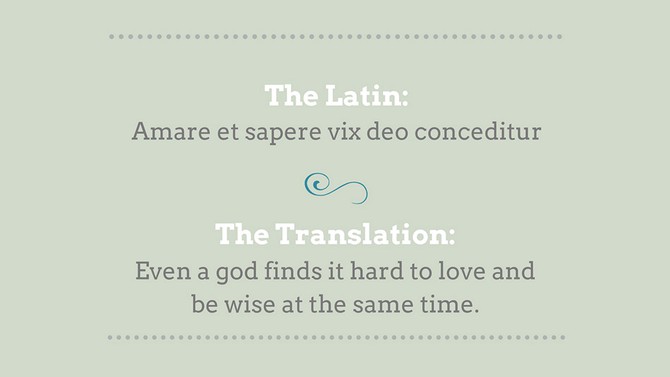
In ancient Rome, love was considered a divine, as well as human, madness. Ovid tells hundreds of stories about gods who loved unwisely. For example: Apollo, who was so relentless in his pursuit of the unwilling Daphne that she asked her father to turn her into a tree to avoid his kisses. We've all been fools for love and reminding a brokenhearted friend (or ourselves) that even the masters of the universe have been in the same position may provide a bit of all-too-human comfort.
ann patty latin
Ascribed to Publilius Syrus, a 1st century AD writer known for his aphorisms, this saying reminds us that even the smallest action has consequences, that everything and everyone, no matter how seemingly insignificant, affects the universe. (Not for nothing, Syrus was brought from Syria to Italy as a slave. He so impressed his master with his pithy wit that the master freed and educated him).
ann patty latin phrases
Aulus Gellius, a 1st century BC politician, recounts the incident that inspired this saying: A man with long hair and a waist-length beard approached the Athenian aristocrat Herodes asking for bread. When Herodes asked who he was, the beggar, offended, asked why Herodes thought it necessary to ask about what was obvious. "I am a philosopher," he stated. "I see a beard and a cloak," Herodes responded. "The philosopher I do not yet see." An elegant note to self when having to deal with those who act wiser or more knowledgeable than they are.
latin phrases from ann patty
This rallying cry has been a favorite of politicians for millennia. "Things might be bad now, but I will lead you to better times." Note: an inspirational message you can pass on to kids at the dinner table….
ann patty sayings in latin
A more powerful, ancient saying to our modern "between a rock and a hard place." It's so much more vivid and motivational—jump or be eaten.
latin phrases
This phrase from Cicero, Republican Rome's most celebrated orator, warns against an overzealous desire to get famous/rich/successful with little work. A must cake—made from wheat flour and sediment left from making wine—was a cheap food. Real glory arrives, the orator suggested, only after we've put in some hard, costly, sustained effort.
phrases in latin that should make a comeback
This maxim by Seneca, 1st AD century philosopher, politician and playwright, reminds us not to struggle when the world will have its way with us. Better to accept reality than to fight it, even if the results turn out to be identical—a piece of advice that Seneca was forced to reckon with. He was for many years Emperor Nero's tutor and adviser, until Nero forced him to commit suicide. This he did (though it took three attempts in one afternoon).
latin phrases ann patty
A saying about rough times that works in any language.

Ann Patty is the author of Living with a Dead Language: My Romance with Latin. The founder and publisher of The Poseidon Press, and an executive editor at Crown Publishers and Harcourt, she now teaches Latin to teenagers.
Published 08/19/2016
You May Also Like
Empowerment and Purpose
Is There an Upside to Tragedy?
Empowerment and Purpose
11 Everyday Heroes Who Bring Healthcare to Those in Need
Empowerment and Purpose
The Important Reason Every Adult Should Call in "Sick" to Work Sometimes
Empowerment and Purpose
How Megyn Kelly Deals With Online Bullies

View All Newsletters

Related Articles
Empowerment and Purpose
How to Have Your Best Year Yet
Empowerment and Purpose
Martha Beck: How to Tap into the Right Side of Your Brain
Empowerment and Purpose
The Surprising Value of Saying 'I Don't Know'
Empowerment and Purpose
7 Quotes to Ignite Your Inner Confidence
Empowerment and Purpose
Gary Zukav: How to Get Your Power Back
Empowerment and Purpose
Book Excerpt: 'Build the Life You Want' by Oprah and Arthur Brooks