Grazydas/iStock/Getty Images Plus
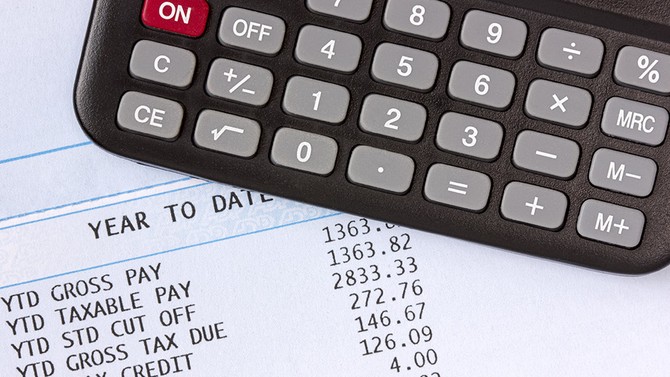
THE JARGON: Gross vs. Net Income
THE LOWDOWN: Let’s say you make $75,000 a year, which comes out to $6,250 per month. That’s your Gross annual and monthly income. Now “Picture your $75,000 being dumped into a gigantic net,” says Prudential expert Amanda Panico, CLU, CFP. "Imagine your paycheck deductions like Social Security, health insurance, and retirement savings falling through so you’re left holding a lighter 'net.'." Your income before deductions is Gross; the left-over money you actually take home is Net.
MASTER MOVE: Know the Net “"take home”" number on your paycheck by heart. That's how much money you have to live off of each pay period.
THE LOWDOWN: Let’s say you make $75,000 a year, which comes out to $6,250 per month. That’s your Gross annual and monthly income. Now “Picture your $75,000 being dumped into a gigantic net,” says Prudential expert Amanda Panico, CLU, CFP. "Imagine your paycheck deductions like Social Security, health insurance, and retirement savings falling through so you’re left holding a lighter 'net.'." Your income before deductions is Gross; the left-over money you actually take home is Net.
MASTER MOVE: Know the Net “"take home”" number on your paycheck by heart. That's how much money you have to live off of each pay period.
Portra Images/Digital Vision/Getty Images
THE JARGON: Fixed, Flexible, and Discretionary Expenses
THE LOWDOWN:
- Fixed expenses are necessary costs of living that do not change monthly. Examples would include rent, the cable bill, and your car payment.
- Flexible expenses occur with regularity, but you have some control over them, such as your daily lunch. “I love this sushi restaurant nearby, but after tip, I always seem to spend 20 dollars," says Panico. Oftentimes, she opts instead for the delicious (and more affordable) sushi offered by her local grocer. "Those two options are examples of Flexible expenses."
- Discretionary money, explains Panico, is your "fun" money. "Like the cheesecake you split with your friend after a long day of shop-till-you-drop action!"
MASTER MOVE: Use your Net income to plan for your Fixed, Flexible, and Discretionary spending and you've just created a Budget.
THE LOWDOWN:
- Fixed expenses are necessary costs of living that do not change monthly. Examples would include rent, the cable bill, and your car payment.
- Flexible expenses occur with regularity, but you have some control over them, such as your daily lunch. “I love this sushi restaurant nearby, but after tip, I always seem to spend 20 dollars," says Panico. Oftentimes, she opts instead for the delicious (and more affordable) sushi offered by her local grocer. "Those two options are examples of Flexible expenses."
- Discretionary money, explains Panico, is your "fun" money. "Like the cheesecake you split with your friend after a long day of shop-till-you-drop action!"
MASTER MOVE: Use your Net income to plan for your Fixed, Flexible, and Discretionary spending and you've just created a Budget.
Jason York/iStock/Getty Images Plus
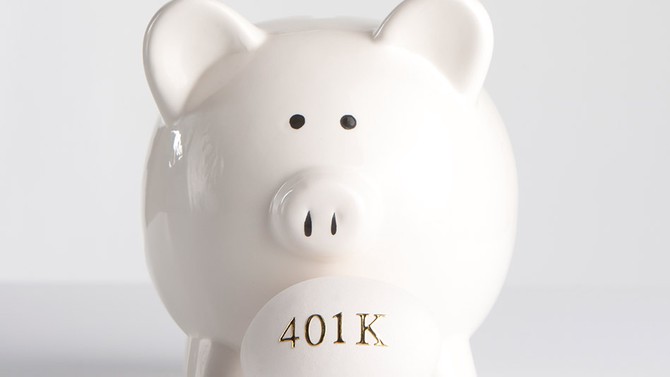
THE JARGON: 401K and Roth IRA
THE LOWDOWN: 401Ks and IRAs are types of retirement savings accounts. Both types may be offered by your employer as a way to automatically save for retirement with each paycheck. Some employers even offer matches, which means you put in money to participate and the company pays you a matching sum towards your retirement. If this is an option for you, aim to contribute as much as it takes to get the full match available.
Traditional IRA or 401K contributions are made pre-tax from your Gross income. The money, therefore, will be taxed when you withdraw it (presumably at retirement). Roth IRA monies get deposited with after-tax dollars, which means they won’t be taxed at the time of withdrawal. Although you get no current tax break, the growth is all free and clear as long as you hold it five years and are 59 ½ years old before your first withdrawal.
Panico offers, "Roth IRAs can give the feeling of safety because you can have your cake and eat it, too. That's why some women even count Roth assets in their Emergency Funds."
MASTER MOVE: A quick way to determine if a Traditional IRA or 401K would be best for you vs. a Roth IRA is to pay attention when you do your annual income taxes. If you normally get a refund, consider a Roth. If you generally owe money, the Traditional retirement plans might be a better choice. There are also online calculators that can help you decide, or seek guidance from a Certified Financial Planner or low-cost accountant.
THE LOWDOWN: 401Ks and IRAs are types of retirement savings accounts. Both types may be offered by your employer as a way to automatically save for retirement with each paycheck. Some employers even offer matches, which means you put in money to participate and the company pays you a matching sum towards your retirement. If this is an option for you, aim to contribute as much as it takes to get the full match available.
Traditional IRA or 401K contributions are made pre-tax from your Gross income. The money, therefore, will be taxed when you withdraw it (presumably at retirement). Roth IRA monies get deposited with after-tax dollars, which means they won’t be taxed at the time of withdrawal. Although you get no current tax break, the growth is all free and clear as long as you hold it five years and are 59 ½ years old before your first withdrawal.
Panico offers, "Roth IRAs can give the feeling of safety because you can have your cake and eat it, too. That's why some women even count Roth assets in their Emergency Funds."
MASTER MOVE: A quick way to determine if a Traditional IRA or 401K would be best for you vs. a Roth IRA is to pay attention when you do your annual income taxes. If you normally get a refund, consider a Roth. If you generally owe money, the Traditional retirement plans might be a better choice. There are also online calculators that can help you decide, or seek guidance from a Certified Financial Planner or low-cost accountant.
Dolgachov/iStock/Getty Images Plus
THE JARGON: Diversification
THE LOWDOWN: Panico asks clients to “Imagine a closet of only red clothing. If it is Christmas or Valentine's Day, you would have a wonderful selection to choose from. Now imagine you have to go to a Spring wedding or worse——a funeral. Ahem…...awkward!”
Your closet needs more than one color, as does your portfolio. That's why Diversification is key to protecting your money. You don't need to be an expert, but you should consider owning a variety of assets, real estate, bonds, and all types of stocks including those from companies of various sizes. Lack of diversification can cause you to take on too much risk or limit your potential for reward. Panico advises to "Mix it up so you are prepared for all upcoming market events——good, bad, or ugly."
MASTER MOVE: To help you diversify, many 401Ks offer breakdowns by category of assets. 401K and IRA plans may also offer hands-on tools in the form of quizzes (also known as asset allocation profiles) to assist in your portfolio asset selection. Usually, there are private advisors over each plan to provide further guidance. In your company 401K, your employer has paid for that service, so never be afraid to ask for help and use the resources available to you.
THE LOWDOWN: Panico asks clients to “Imagine a closet of only red clothing. If it is Christmas or Valentine's Day, you would have a wonderful selection to choose from. Now imagine you have to go to a Spring wedding or worse——a funeral. Ahem…...awkward!”
Your closet needs more than one color, as does your portfolio. That's why Diversification is key to protecting your money. You don't need to be an expert, but you should consider owning a variety of assets, real estate, bonds, and all types of stocks including those from companies of various sizes. Lack of diversification can cause you to take on too much risk or limit your potential for reward. Panico advises to "Mix it up so you are prepared for all upcoming market events——good, bad, or ugly."
MASTER MOVE: To help you diversify, many 401Ks offer breakdowns by category of assets. 401K and IRA plans may also offer hands-on tools in the form of quizzes (also known as asset allocation profiles) to assist in your portfolio asset selection. Usually, there are private advisors over each plan to provide further guidance. In your company 401K, your employer has paid for that service, so never be afraid to ask for help and use the resources available to you.
Mark Edward Atkinson/Blend Images/Getty Images
THE JARGON: Good Debt vs. Bad Debt
THE LOWDOWN: Good Debt is normally described as such because it creates value, while Bad Debt causes you to lose value. Panico offers a few prime examples. "Your home mortgage equals Good Debt. You buy the house and it increases in value (in most cases), while your debt decreases over a fixed period of time. Good Debt normally has a fixed repayment period and a lower interest rate than Bad Debt."
Cars, however, are usually classified as Bad Debt. “When you buy new, the investment immediately loses thousands of dollars just for driving off the lot. Credit cards are another example of Bad Debt because clothing, shoes, and martinis charged to the card immediately have no value. Credit cards also have very high interest rates."
MASTER MOVE: Make every effort to avoid Bad Debts and pay off ones you have incurred in the past.
THE LOWDOWN: Good Debt is normally described as such because it creates value, while Bad Debt causes you to lose value. Panico offers a few prime examples. "Your home mortgage equals Good Debt. You buy the house and it increases in value (in most cases), while your debt decreases over a fixed period of time. Good Debt normally has a fixed repayment period and a lower interest rate than Bad Debt."
Cars, however, are usually classified as Bad Debt. “When you buy new, the investment immediately loses thousands of dollars just for driving off the lot. Credit cards are another example of Bad Debt because clothing, shoes, and martinis charged to the card immediately have no value. Credit cards also have very high interest rates."
MASTER MOVE: Make every effort to avoid Bad Debts and pay off ones you have incurred in the past.
Published 02/02/2015
Get the Live Your Best Life Newsletter
Advice for growing and discovering your best self.
By entering your email address, you agree to our Terms of Use and acknowledge the Privacy Policy. OWN and its affiliates may use your email address to provide updates/news, ads, and offers.
To withdraw your consent or learn more about your rights, see the Privacy Policy.